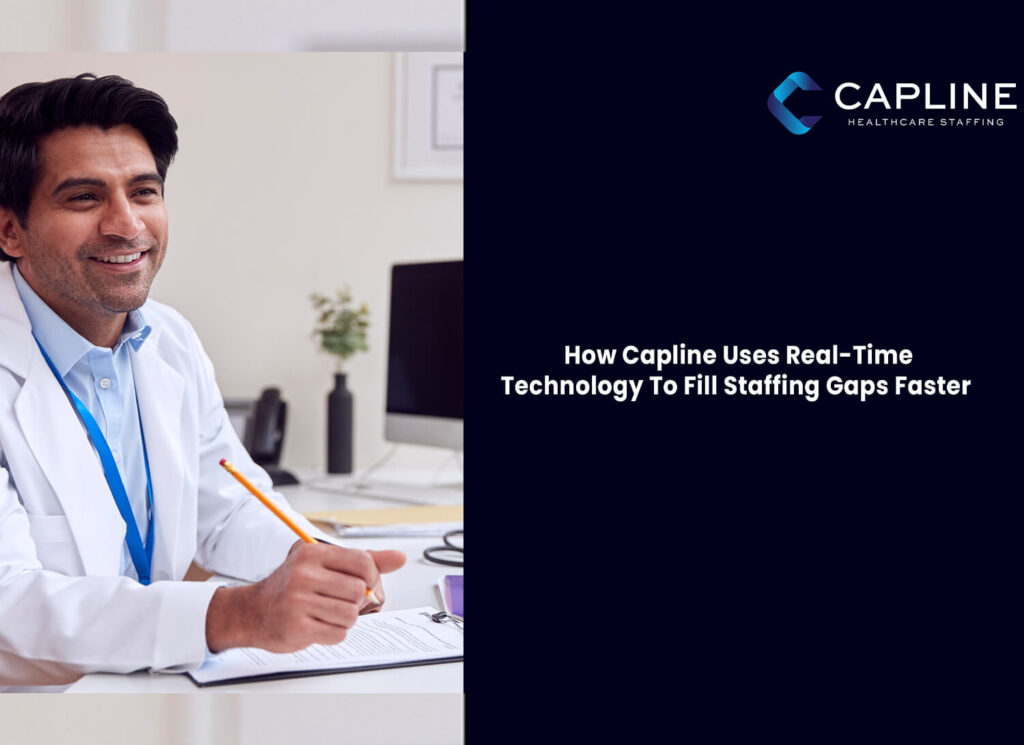
Capline’s approach shows how real‑time workforce management healthcare technology supports faster staffing in hospitals and clinics. It focuses on smarter matching, fast credential verification, and live shift planning with Healthcare staffing software that feels simple and immediate.
When hospitals face staffing gaps, late‑night nurse shortages, sudden patient surges, or vacancies, slow manual scheduling causes stress and delays. Capline Healthcare Staffing is using real‑time workforce management tools to plug those gaps fast. By the time someone calls in sick or census increases, Capline’s system helps find a qualified person in minutes. That’s a game‑changer in healthcare.
Why real‑time workforce management matters in healthcare
1. Patients come first: Hospitals can’t wait. Every open shift risks longer wait times, overworked staff, or missed care. By enabling real‑time workforce management in healthcare, Capline helps ensure each shift is safely staffed, improving both morale and patient trust.
2. Staff expectations have changed: Healthcare workers today expect flexible schedules and instant visibility into available shifts. With Healthcare staffing software, they can sign up for last‑minute shifts or request swaps via a mobile app. That level of control keeps them engaged and lowers burnout.
Capline’s real‑time technology stack
Credentialing and verification in moments: Traditionally, verifying a nurse or tech’s credentials takes days. Capline integrates instant credential checks into its workflow. When a candidate updates their documents, the system flags expired items. If something is missing, the system prompts for action, with no waiting. This ensures regulatory compliance and speed in one step.
Dynamic shift boards and mobile access: Capline uses Healthcare staffing software that shows live updates: open shifts, staff availability, certifications, and last‑minute changes. Employees are able to accept shifts, trade them, and receive confirmations immediately. It makes coordination easier and eliminates phone tag or email backlog.
AI‑driven matching and forecasting: Capline applies AI tools that analyze patterns: seasonal patient flow, typical absenteeism, and past fill rates. The system then predicts when staffing holes will appear and alerts managers in advance. That lets Capline pull from its pool before a crisis hits, rather than scrambling at the last minute. It’s smarter scheduling tied to real‑time data.
Benefits: what Capline’s clients experience
Why Capline’s approach stands out
Best practices for healthcare clients using Capline
How Capline aligns with real‑time workforce management healthcare needs
The way Capline fits into real-time workforce management healthcare requirements
Capline offers everything in one platform by combining scheduling, credential checks, forecasting, and feedback. Such a combination makes real-time coordination in healthcare not a buzzword, but realistic, daily, and a way to improve patient and staff results.
Here’s a quick summary:
All of this provides quicker staffing fills with a minimum of fuss and more robust care continuity.
Why this matters for healthcare today
Less burnout and avoidance of overtime: Shortages of staff members usually lead to compulsory overtime or excessive working hours. With rapid fill by means of in‑app sign‑ups, excess shifts decrease, and burnouts become less severe. This makes it easier to remember and enhances health.
Prevents Interruption of Patient Care: The inpatient care is always threatened by every open shift. Embarking on swift fill is the guarantee of safe coverage and sturdy outcomes for patients.
Reduction of agency fee and unforeseen expenses: Agency staffing will incur exclusionary expenses. Capline saves money by eliminating the high costs of filling shifts as fast as possible within the organization.
Being in compliance with no additional stress: Renewal license renewal alerts or expired certification alerts remind your staff to be up to date and within the regulations of your state and federal government. There is no more scrambling or auditing.
Final thoughts
Capline Healthcare Staffing proves that real‑time workforce management isn’t a bad idea; it’s a working solution designed for healthcare’s unique demands. By uniting forecasting, credentialing, mobile apps, and feedback loops, Capline helps fill gaps faster, keep costs down, and support happier staff. If you work in a hospital or clinic wrestling with last‑minute staffing holes, burnout, or compliance complexity, Capline’s signed, ready staffing model shows how technology can help. It puts the power of Healthcare staffing software to work where it matters most in fast, reliable, and straightforward staffing that responds in real time. If you want to know more about real-time technology, connect with Capline’s expert team now.