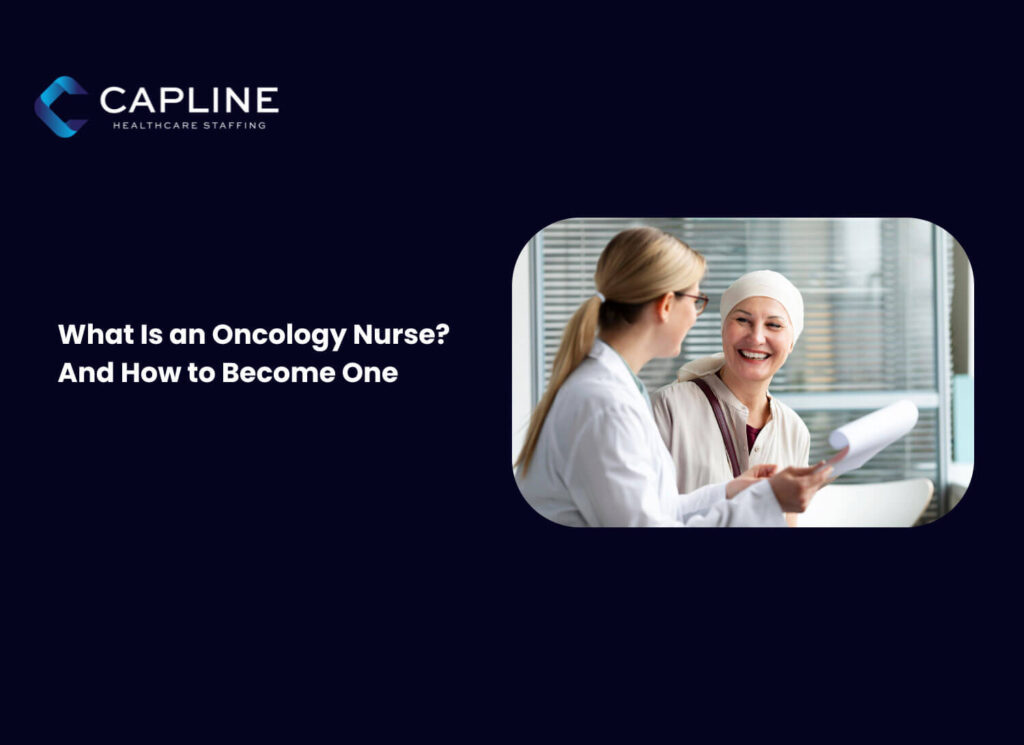
Cancer care is not simple for patients or care teams. A person may need tests, scans, chemotherapy, radiation, surgery, follow-up visits, and long-term support. That is a lot to handle, especially when the patient is already dealing with fear, pain, or treatment side effects.
In 2026, about 2.1 million new cancer cases are expected in the United States, according to the American Cancer Society. At the same time, the U.S. Bureau of Labor Statistics says registered nurse jobs are expected to grow 5 percent from 2024 to 2034, with about 189,100 openings each year. These numbers show why trained nurses are so important in cancer care.
In this article, we’ve explained what an oncology nurse does, where they work, what skills they need, and how to become one.
An oncology nurse is a type of registered nurse who works with cancer patients. They may work with patients before, during, and after cancer treatment.
Their role isn't just to administer medication and take blood pressure. They also explain treatment processes, monitor for side effects, answer patients' questions, and educate the family about the treatment. Often, a patient spends more time with their nurse than their doctor, making the nurse an integral member of the patient's care team.
An oncology nurse might care for patients who are newly diagnosed, undergoing treatment, or requiring follow-up care after treatment.
An oncology nurse's tasks may vary depending on where they work. In a hospital, a nurse might care for very ill patients. A nurse in an infusion center may give chemotherapy. A nurse in a clinic may talk to patients and check their symptoms.
Common duties include:
A big part of this role is patient education. Chemotherapy and other treatments can cause side effects like nausea, vomiting, fatigue, pain, skin issues, hair loss, and being more susceptible to infection. A nurse should educate the patient on what's normal, what's not, and when to seek help.
An oncology nurse can work in many healthcare settings. Some nurses work with adults. Some work with children. Some focus on a certain cancer type, while others care for many kinds of cancer patients.
Common workplaces include:
Outpatient cancer care has become very common. This means many patients go home the same day after treatment. In these settings, the oncology nurse plays an important role in teaching patients how to care for themselves at home.
Health care for cancer patients is stressful, and patients may not always know what is important. For instance, a fever may not be much of a deal to one person, but it could be a big deal for a patient receiving chemotherapy.
An oncology nurse explains these symptoms. And they help patients not feel alone. This can be important because there's a lot of information about cancer treatment, including appointments, medications, tests, and instructions.
The nurse also supports doctors and other nurses by observing for early signs. The patient may look more tired than normal, have pain, or an infection. The nurse knows when to report these changes and when something may need to be done quickly.
The first step to becoming an oncology nurse is to become a registered nurse. Then, nurses can gain experience, training, and certification in cancer care.
The first step is to complete an approved nursing program. Many nurses choose either an associate degree in nursing or a bachelor’s degree in nursing.
A bachelor’s degree may be helpful for nurses seeking more options in hospitals, specialty units, leadership roles, or future advanced nursing roles.
After nursing school, graduates must pass the NCLEX-RN exam to become licensed registered nurses. This exam checks whether a nurse is ready to provide safe entry-level care.
Some nurses start in oncology soon after getting licensed, but many first work in medical-surgical units, hospitals, or clinics. This helps them build strong basic nursing skills. Useful experience includes:
These skills are important because cancer patients can have fast changes in their condition.
After gaining nursing experience, a nurse can apply for oncology jobs. New oncology nurses often receive training in cancer basics, chemotherapy safety, side effect management, and patient education. This is where nurses learn the details of cancer care. They learn how treatments work, which symptoms need urgent attention, and how to support patients during long care plans.
Certification is not always required for every job, but it can help show deeper knowledge. The Oncology Nursing Certification Corporation offers the Oncology Certified Nurse credential. To qualify, nurses need an active RN license and at least 2,000 hours of adult oncology nursing practice within the previous four years.
An oncology nurse needs strong clinical skills, but they also need patience and clear communication. Cancer patients often have many questions, and some may ask the same question more than once because they are scared or overwhelmed. Important skills include:
This role is best for nurses who can stay steady during hard moments and still explain things in a simple way.
Oncology nursing can be a strong career path for nurses who want meaningful patient care. It can be emotionally hard, but many nurses find the work rewarding because they build close connections with patients and families. The demand for registered nurses remains steady, and cancer care will continue to need trained nursing support.
An oncology nurse helps patients through one of the most difficult times in their lives. They explain treatment, watch for side effects, support families, and help the care team respond when problems come up. For healthcare teams that need reliable staffing support, visit Capline Healthcare Staffing. Connect with the right healthcare professionals to support safer, smoother patient care.
No. Some oncology nurses give chemotherapy, but others work in clinics, hospitals, radiation care, surgery support, palliative care, or patient education.
Yes. Some workplaces hire new nurses into oncology roles and provide training. Others may prefer nurses with general clinical experience first.
Yes, it can be hard. The work can be emotional and busy. Nurses need training, support, and healthy boundaries.
Not always. Certification is helpful, but many nurses first enter oncology through clinical experience and workplace training.
A good oncology nurse is careful, calm, clear, and kind. They know how to notice changes, explain care steps, and support patients without rushing them.